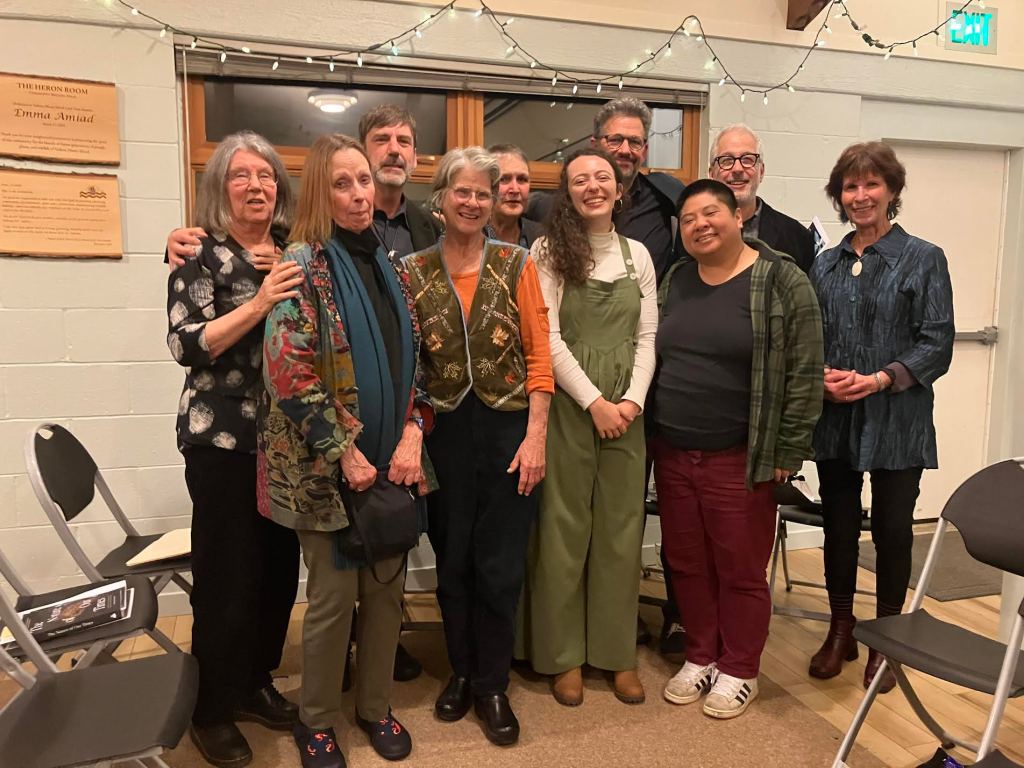
From “A night of poetry celebrates ‘The Nature of Our Times’” by Elizabeth Shepherd (Vashon-Maury Island Beachcomber, 20 January 2026):
A standing-room audience filled the [Vashon] Land Trust Building last week for a spirited local launch of The Nature of Our Times, a new poetry anthology reflecting on America’s lands, waters and wildlife.
Phil Levin, an islander and board member of the Vashon-Maury Land Trust, introduced the evening. Levin is the director of The Nature Record, which is conducting the first national scientific assessment of U.S. lands, waters and wildlife.
The Nature of Our Times, a project of The Nature Record in partnership with Paloma Press, Poets for Science and the Wick Poetry Center, he said, was published in recognition that scientists alone cannot solve America’s environmental woes.
“There are things we can measure — the number of salmon returning up Shinglemill Creek, warming oceans, shifting species ranges — and that kind of knowledge really matters,” Levin said. “But there’s another way of knowing that doesn’t fit neatly into charts or computer models. It comes from standing still, from listening, and that’s where poetry lives. Poetry changes what we notice, what we value and defend.”
From “Elliot Bay Book Company presents ‘The Nature of Our Times’ poetry reading” by Charlotte Parry (The Daily, 22 Jan 2026):
The anthology, released in September 2025, is years in the making. Initially, it was set to accompany the first United States nature assessment, but that project was cancelled after President Donald Trump took office. Subsequently, it became paired with United By Nature’s initiative to document the role of nature in the economy, growth, and health of the United States. According to Hassler, the co-editor of “The Nature of Our Times” and director of the Wick Poetry Center, the anthology illustrates the ways poetry and nature are intertwined.
“The idea of this anthology is to bring together voices, not just from poets, but scientists, teachers, youth, who are inspired to write about their emotional connection to the environment and to science,” Hassler said. “Poetry becomes another way of knowing and another way of feeling and integrating our knowledge.”
